 Skip to content


Free Picks vs Paid Picks: Which One Actually Pays Off?
Free picks make sense if you’re learning the game or just want to sample an analyst’s work before committing money. Paid picks can be worth it, but only for bettors disciplined enough to overcome the subscription cost and verify a documented edge over a real sample size. That’s the whole verdict. Everything else is about proving it for your own bankroll.
Here’s the evidence behind that call:
- The information tax is real. Subscription or per-pick fees can quietly erase your expected profit if your average stake is too small to absorb the cost, an effect Unabated calls the “information tax”.
- Sample size beats marketing copy. OddsShopper’s vetting guidance recommends watching 50 to 100 graded plays before you ever pay for a service.
- ROI and units matter more than win rate. A 73% hit rate means nothing without knowing the odds attached to each play and how units were staked.
📌 Quick action plan: Follow a free track for 50 to 100 plays, log everything in units, then test a paid service on a small bankroll before scaling up.
Key Takeaways
Free picks are best for learning and sampling, while paid picks only make sense once a documented, unit-based edge is verified against your own stake size and fees.
Table of Contents
- Free Picks vs Paid Picks: What Each Term Actually Means
- Free Picks: Pros and Cons
- Paid Picks: Pros and Cons
- How Do You Vet a Picks Service Before Paying?
- How Do Pros Actually Measure a Picks Service’s Value?
- What Do Paid Picks Typically Cost?
- Where Can You Find Reliable Free Picks?
- Which Approach Actually Fits Your Goals?
- Why Transparency Beats Flashy Claims
- 🎯 Ready to Test a Documented, Transparent Picks Service?
- Sources
- FAQ
Free Picks vs Paid Picks: What Each Term Actually Means
A free pick is a sports betting selection given away at no cost, usually as a sample of an analyst’s or service’s work. A paid pick comes from a subscription, package, or per-play purchase where the buyer expects documented, ongoing access to a handicapper’s full slate.
Free picks show up in a few common formats:
- Social media posts and newsletter teasers
- Public archive threads with partial or full history
- Community-tracked records on forums or Discord channels
Paid picks tend to follow a narrower set of delivery models:
- Monthly or seasonal subscriptions
- Per-pick or per-game pricing
- Bundled packages (NFL Sunday slate, NBA parlay packs, etc.)
The gap that matters most isn’t price. It’s whether you’re seeing a curated highlight reel or a fully tracked, unit-based archive. That distinction drives everything in the vetting process below.
Free Picks: Pros and Cons
Free picks cost nothing, which makes them the obvious starting point if you’re still learning how spreads, totals, and moneylines actually move. You get to watch how an analyst reasons through a game, compare their logic to the closing line, and build pattern recognition without risking a dime beyond your own wager.
The upside:
- Zero financial risk beyond your own bet
- Great for beginners building an internal betting framework
- Low friction, letting you test dozens of analysts quickly
- A useful preview of a paid service before you subscribe
The downside:
- Free samples are often the best plays, not the full slate
- Small sample sizes make results statistically shaky
- Many free feeds exist purely to drive subscription sign-ups
- No guarantee the free record reflects the paid product’s quality
Pro Tip: Track any free pick source for 50 to 100 graded plays using flat units, not dollars, before deciding whether it deserves a real bankroll behind it. If the source won’t let you see that many plays, that itself is a red flag.
Paid Picks: Pros and Cons
Paying for picks buys you access to a handicapper’s entire slate, not just their headline plays, along with staking guidance and, from serious services, verifiable results over time. Some services also layer in coaching or explain the reasoning behind a line, which can accelerate your own learning curve far faster than free samples alone.
The upside:
- Full-card access instead of cherry-picked samples
- Potential edge from research you don’t have time to do yourself
- Staking and bankroll guidance built into the service
- Transparent operators publish full, exportable records
The downside:
- Fees can quietly wipe out expected profit for small-stake bettors
- Short or unverifiable track records are common in the industry
- Lines can move against you if enough followers bet the same side
- Refund policies often bury conditions in fine print
The math only works in your favor when the service’s real edge, after fees, still beats what you’d earn betting blind. Unabated’s breakeven analysis shows a 55% picker charging a flat monthly fee can still lose money for a bettor whose stake size is too small to absorb the cost.
Before paying anyone, calculate your breakeven stake size. If the math doesn’t work at your bankroll level, no win rate fixes that.
How Do You Vet a Picks Service Before Paying?
Run through this checklist before your card leaves your wallet:
- Demand documented, unit-based records. Dollar figures hide real performance; units normalize it across bet sizes.
- Ask for exportable logs. A service that can’t produce a spreadsheet or export file is asking you to trust a claim, not a record.
- Check the sample size. OddsShopper puts the minimum useful threshold at 50 to 100 graded plays in the sport you actually bet.
- Look for CLV evidence. A service that tracks its picks against the closing line is showing you real skill, not luck.
- Confirm ROI and units reporting side by side. A high win rate paired with negative ROI means the odds on winners were too short to matter.
- Read the money-back terms closely. Guarantees only mean something if the conditions attached to them are realistic.
Questions worth asking any service directly:
- “Can I see 50 to 100 of your most recent graded plays?”
- “Are results tracked by date, sport, and unit size?”
- “Do you publish closing-line value alongside your record?”
- “What exactly triggers your money-back guarantee?”
Watch for these red flags:
- Anonymous or unverifiable track records
- Selective “best bets” posted after the fact
- Third-party tracking that can’t be independently confirmed
- Promises of guaranteed win rates above what any honest sample supports
- Pressure tactics pushing you to subscribe before you’ve seen real numbers
Our own breakdown on how to choose betting picks for profitable wagers walks through this same framework in more depth if you want a second pass.
How Do Pros Actually Measure a Picks Service’s Value?
Professional bettors don’t judge a service by its win rate alone. They track results in units, a normalized stake size that lets you compare a $50 bettor’s record against a $5,000 bettor’s without either number lying to you. ExpatBets notes that consistent, exportable unit tracking matters more than which app or spreadsheet you use, as long as you actually use one.
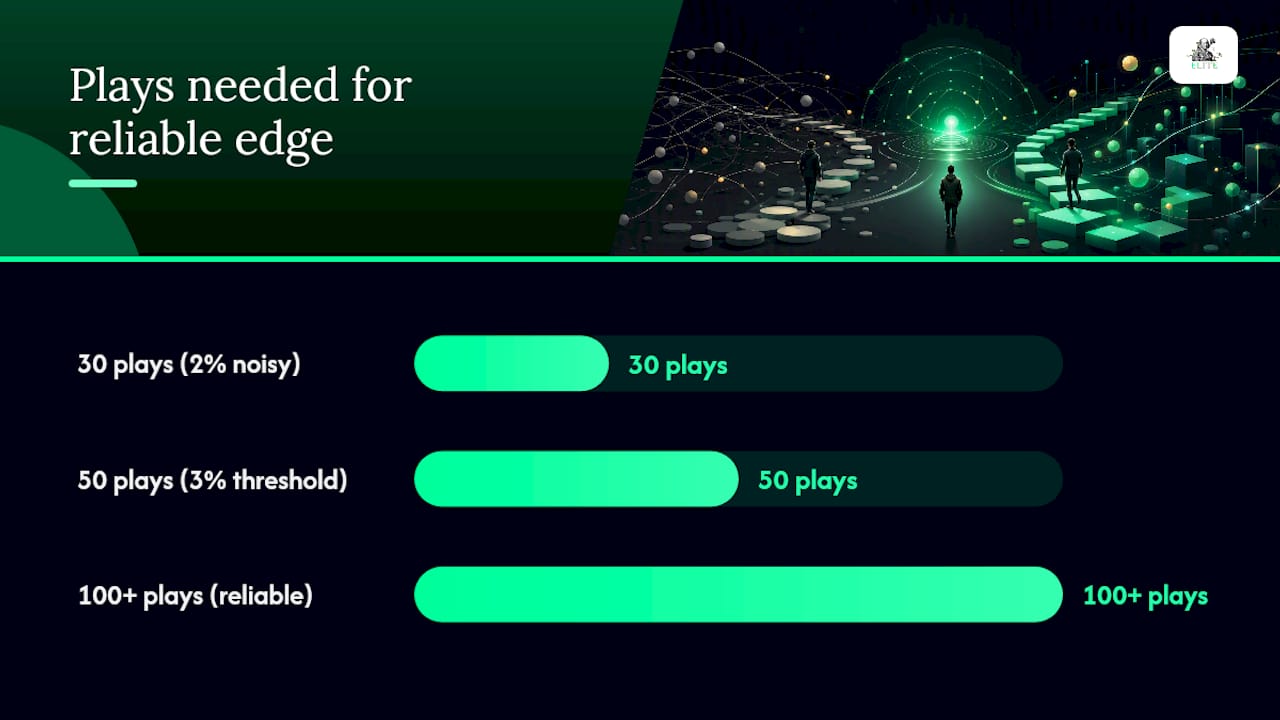
Edge and sample size go hand in hand. Datafield’s sports betting guidance recommends setting a minimum edge threshold, often cited around 3%, before a bet is even worth placing, since anything smaller gets swallowed by estimation noise. That same logic applies to picks services: a 2% edge on a 30-play sample tells you almost nothing statistically. You need 50 to 100 plays minimum before drawing real conclusions.
Closing-line value (CLV) is the sharper metric serious bettors lean on. Sharksnip’s CLV handbook explains that beating the closing number consistently is one of the clearest signals a bettor (or a service) has genuine skill rather than short-term variance. Our own guide to closing line value breaks down how to calculate it against your own bet history.
A simple staged test protocol looks like this:
- Weeks 1 to 4: Track a free sample or trial period at minimum stake, logging every play in units.
- Weeks 5 to 8: Compare your logged results against the closing line to calculate implied edge.
- Weeks 9+: If edge holds above your threshold, scale stakes gradually using flat or Kelly-based sizing, a method our betting strategy comparison covers in more detail.
| Week | Plays Logged | Units Won/Lost | CLV Check |
|---|---|---|---|
| 1-4 | 20-40 | Track flat 1u stakes | Compare closing line weekly |
| 5-8 | 40-80 | Running total | Calculate implied edge % |
| 9+ | 80+ | Scale if edge holds | Confirm CLV stays positive |
What Do Paid Picks Typically Cost?
Pricing in the picks industry generally falls into a few buckets:
- Free tier: sample plays, often the “best bet” of the day
- Monthly subscription: typically ranges widely by sport and volume
- Per-pick pricing: pay only for individual games you want
- Season packages: bulk pricing across an entire league’s season
- One-off premium plays: a single high-confidence play at a premium price
Here’s a simple breakeven check anyone can run:
- Estimate your average stake per pick.
- Multiply that by the service’s real (verified) win rate and average odds to get expected profit per play.
- Divide the subscription fee by the number of plays you’ll actually bet.
- If the per-play cost exceeds your expected profit per play, the subscription isn’t worth it at your current stake size.
If you’re betting $20 a game, a $500 monthly service sending 40 plays needs to clear a real, verified edge just to break even, exactly the scenario Unabated’s breakeven example flags. Bigger stakes change that math fast.
Where Can You Find Reliable Free Picks?
Reliable free picks usually come from three places: reputable analysts who publish sample plays alongside their paid product, public archive threads with dated history, and community-tracked records where users self-report results over time.
Quick-vet any free pick in under a minute:
- Is it dated and tied to a specific game, not vague?
- Is the result reported in units, not just “won” or “lost”?
- Can the record be exported or independently checked?
- Is it clearly labeled as a sample, not the full slate?
Use these free plays to build your own mini verification dataset before you ever consider paying, tracking each one the same way you would a paid pick.
Which Approach Actually Fits Your Goals?
The decision path is simpler than it looks:
- Casual bettors who bet for fun should stick with free picks and treat them as entertainment, not income.
- Learning bettors should sample free plays, track 50 to 100 units of results, and study the reasoning behind each pick.
- Profit-seeking bettors should test a paid service at a small stake first, confirm the edge holds using CLV and ROI, then scale only once the numbers prove out.
The path is: sample free plays → log 50 to 100 units → test a paid service small → scale once the edge is real. If you land in that last group and want a documented, transparent option to test, the next section walks through exactly what to check.
Why Transparency Beats Flashy Claims

Anonymous touts and cherry-picked screenshots have been the industry’s biggest credibility problem for years. A service that only shows you its best month, without the full documented history, isn’t giving you enough information to make a real decision.
Paying for picks only makes sense once a documented edge is proven and the fees are priced against your own stake size. That’s not a hunch. It’s basic math, the same math Unabated uses to explain why a winning service can still lose money for the wrong bettor. Elite Bettings built its entire model around this exact logic: publish full records, report results in units, and let bettors verify the numbers before committing real money.
That’s the bar every picks service should be held to, paid or free.
🎯 Ready to Test a Documented, Transparent Picks Service?
Elite Bettings is built for bettors who’ve already run the math and want a service that survives scrutiny, not one that hides behind selective screenshots. Our full, documented record covers NFL, NBA, NCAAF, NCAAB, and MLB, with every play logged in units so you can verify the numbers yourself.
Here’s what you get:
- ✅ A strong win rate with an average return on investment across a large documented number of picks since 2016
- ✅ Full exportable, unit-based records instead of cherry-picked highlights
- ✅ A money-back guarantee with clear terms and conditions
- ✅ Personalized guidance on staking, line value, and bankroll sizing
🔥 Your first pick is FREE. No card required to see what documented, transparent handicapping actually looks like. Head to our Expert Picks page to claim it and see the full track record for yourself.
Once you’re ready to place a bet, we recommend Stake as the sportsbook to use, thanks to its fast payouts and deep betting markets. You can sign up through our link to get started. And if you’re new to placing wagers, our guide to placing a sports bet walks through the basics in a few minutes.
Sources
Keep these resources handy while building your own verification process:
- Chapter 37: Discipline, Systems, and Record-Keeping | Sports Betting
- How to track your bets like a professional | ExpatBets
- Expert gambling picks: How to vet handicappers | OddsShopper
- Is There Ever a Good Reason To Buy Sports Picks? | Unabated
Whichever tool you pick, export your logs regularly and keep everything in units. That habit alone separates bettors who improve from bettors who guess.
FAQ
Are free picks worth it?
Free picks are worth using as a learning tool and a vetting sample, but they’re rarely a reliable path to consistent profit since they’re often selective and short-sample by design.
Is it worth paying for picks?
Paying for picks can be worth it only after you’ve verified a documented, unit-based edge over 50 to 100 graded plays and confirmed the fee doesn’t exceed your expected profit at your stake size.
What is the most accurate prediction app?
No single app or service can claim guaranteed accuracy; the more useful question is which service publishes full, exportable, unit-based records you can verify yourself, which is why documentation matters more than a headline win rate.
Who bet $100 to win 1.7 million?
Long-shot parlay wins like this occasionally circulate in betting news, but they’re extreme outliers built on massive odds, not evidence that any picks strategy reliably produces that kind of return.
How do I know if a picks service is transparent?
Look for exportable logs, unit-based reporting, and a track record spanning at least 50 to 100 plays; Elite Bettings, for example, documents its full history rather than showing selective wins.